

Article Summary
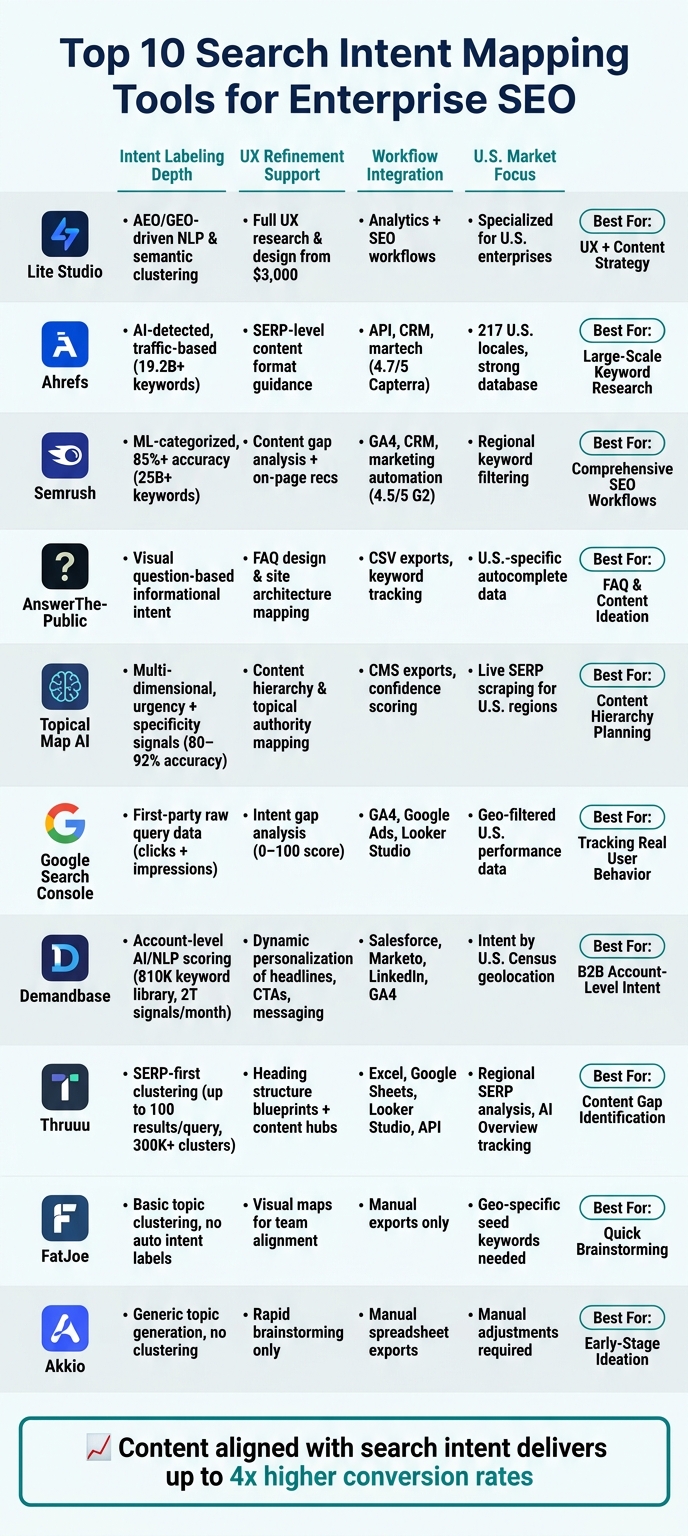
Search intent mapping is the process of identifying the underlying goal behind a user's search query — whether they are seeking information, comparing options, ready to purchase, or navigating to a specific destination — and aligning content with that goal. For enterprises managing thousands of URLs across diverse user journeys, intent mapping determines which pages rank, which convert, and which compete against each other in ways that quietly suppress overall performance. Content that aligns with search intent can deliver up to four times higher conversion rates than content that misses the mark, making intent mapping one of the highest-return investments in an enterprise SEO workflow.
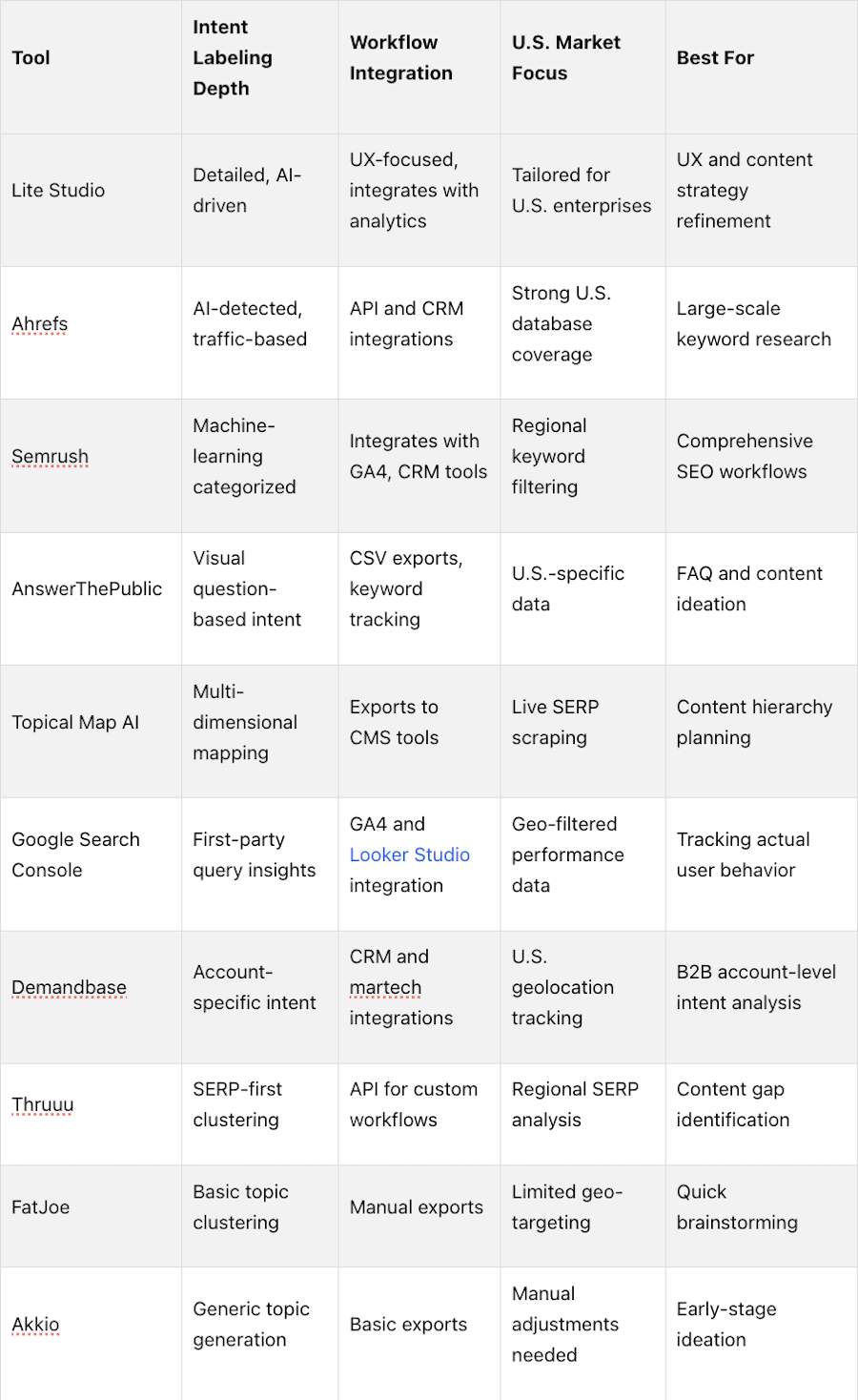
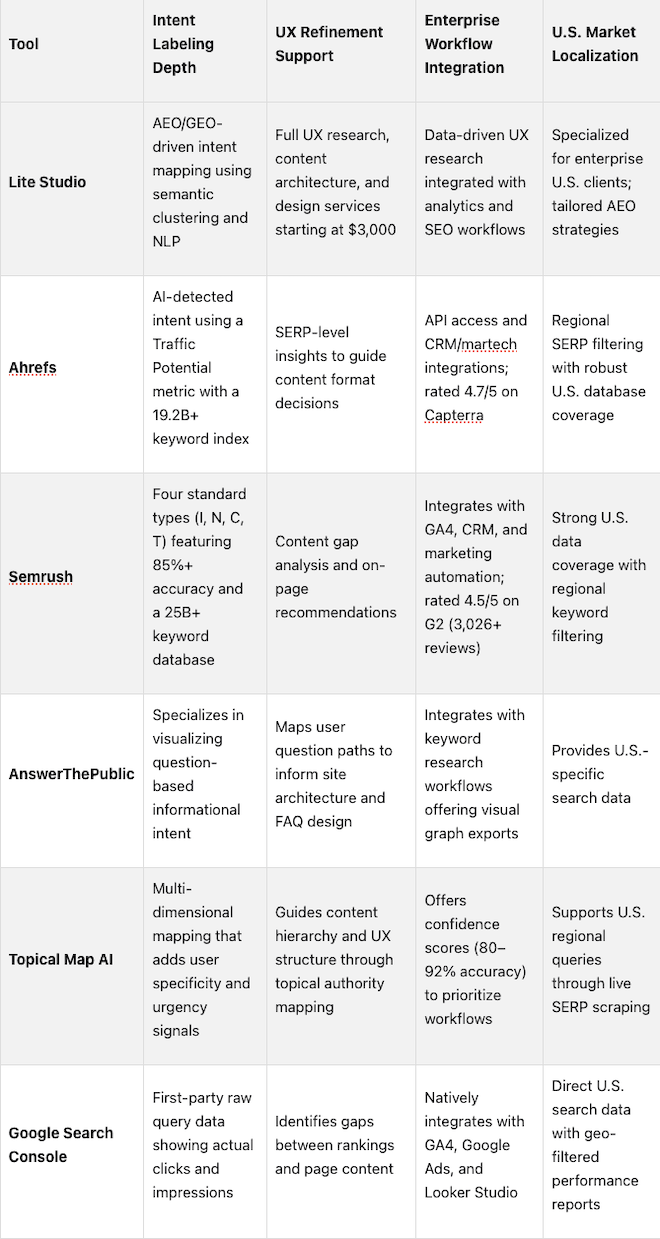
The four criteria are depth of intent labeling — whether the tool goes beyond basic informational and transactional categories to identify mixed intent, cannibalization risk, and confidence scoring; enterprise-scale support including bulk processing, role-based access controls, and SSO compatibility; integration with analytics and UX workflows including connections to Google Search Console, GA4, CRM platforms, and content brief generation; and U.S. market data coverage that accounts for regional, device, and time-of-day variation in intent rather than relying on static global databases. A tool that excels in one or two of these criteria but underperforms in the others will create gaps in the intent-to-execution workflow that limit its practical value.
Ahrefs and Semrush are the strongest tools for large-scale keyword intent analysis and clustering. Ahrefs offers a database of over 2.5 billion U.S. keywords with AI-detected intent, Parent Topic clustering, and SERP Comparison for tracking intent drift over time. Semrush combines a 25-plus billion keyword database with machine-learning intent categorization at 85 percent-plus accuracy, SERP-based clustering through its Keyword Strategy Builder, and Personal Keyword Difficulty scoring that accounts for a domain's existing topical authority. Both integrate with GA4, CRM platforms, and content production workflows in ways that make intent data actionable rather than merely informational.
Google Search Console provides first-party query data — actual clicks and impressions from real users — rather than the modeled estimates that third-party tools produce from scraped or licensed data. This makes it the only tool in the category that shows how pages actually perform in search results rather than how they are predicted to perform. Its intent gap analysis framework — measuring alignment between a page's content and the queries driving its impressions — produces a scored 0 to 100 alignment metric that identifies misaligned pages which are 63 percent less likely to rank in the top 10 even with strong backlinks. Its native integration with GA4, Google Ads, and Looker Studio makes it the cleanest analytics integration available in any intent mapping workflow.
Demandbase operates at the account level rather than the keyword level — it identifies companies actively researching topics related to a product or service by linking IP addresses and bidstream data to a database of over 100 million companies, processing two trillion intent signals monthly. Rather than labeling individual keyword intent, it scores account-level intent as Low, Medium, or High based on how many individuals within a company are engaging with relevant content. This approach is specifically valuable for B2B organizations with long sales cycles and defined target account lists — it enables dynamic website personalization by company, industry, and intent stage rather than by anonymous traffic segment. SAP Concur used Demandbase to reduce its buying cycle from 157 days to 35 days by segmenting visitors by journey stage combined with first-party behavioral data.