

Article Summary
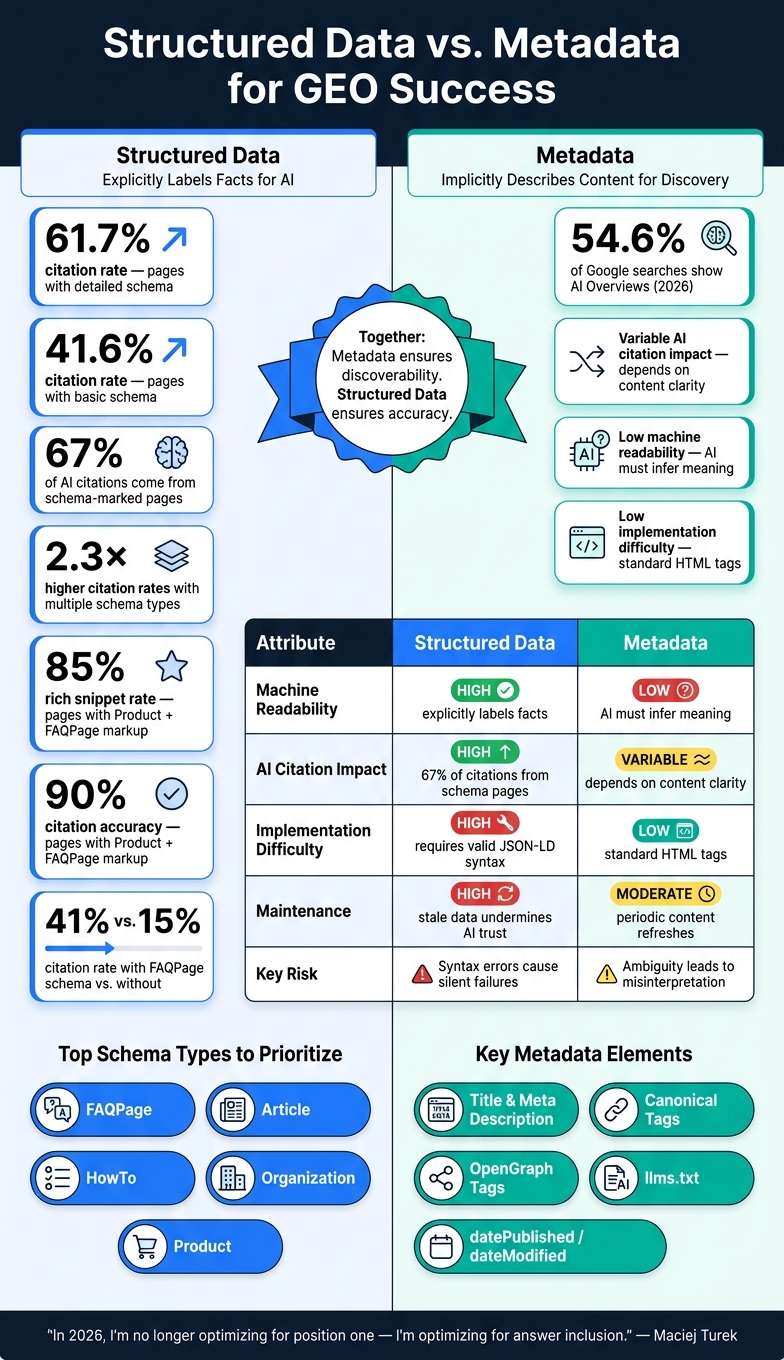
Generative engine optimization (GEO) is the practice of making your content eligible to be cited in AI-generated search answers. With AI Overviews now appearing in 54.6% of Google searches, being cited by AI is becoming as important as ranking on page one — and the businesses that understand this early have a significant advantage.
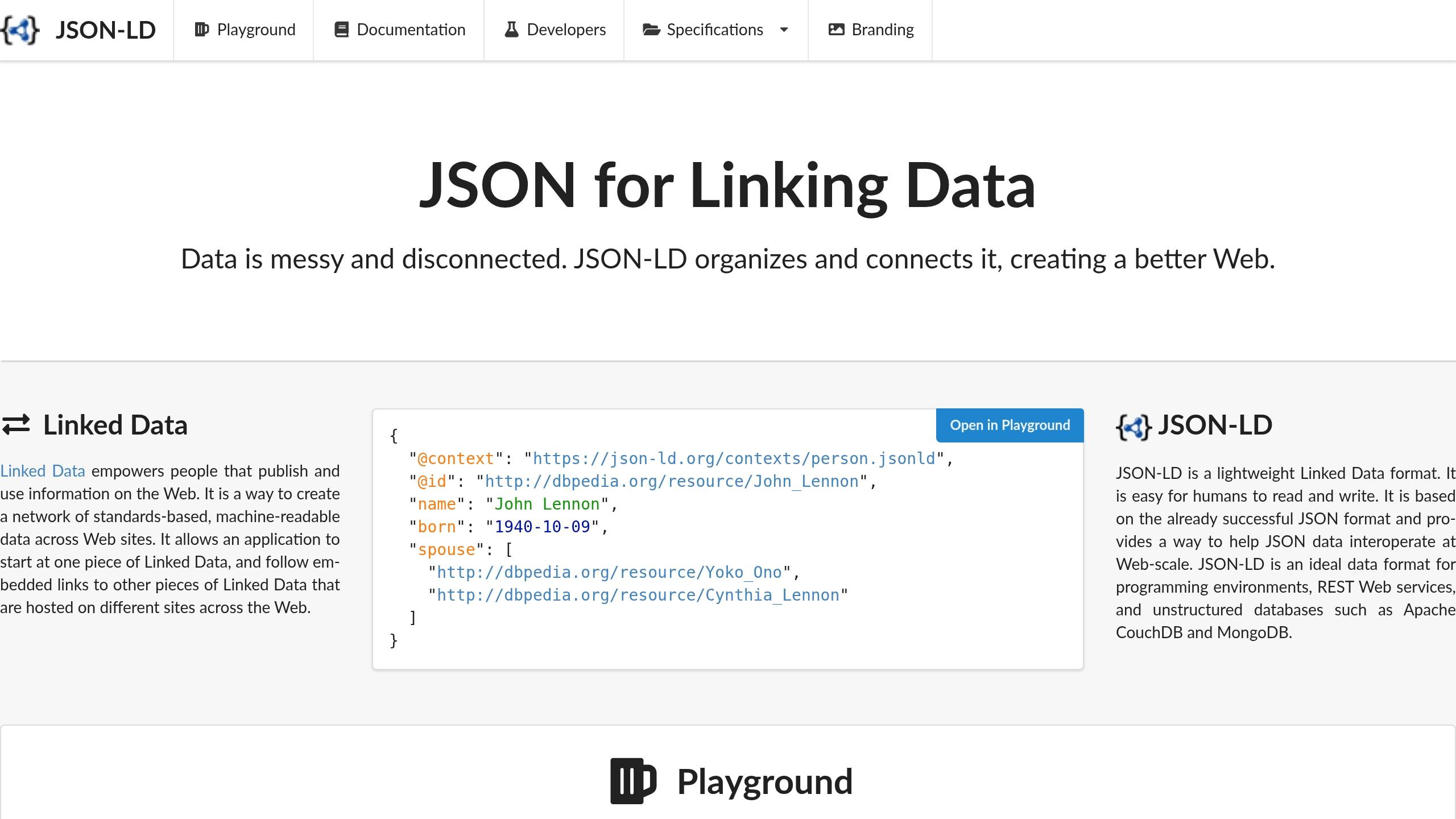
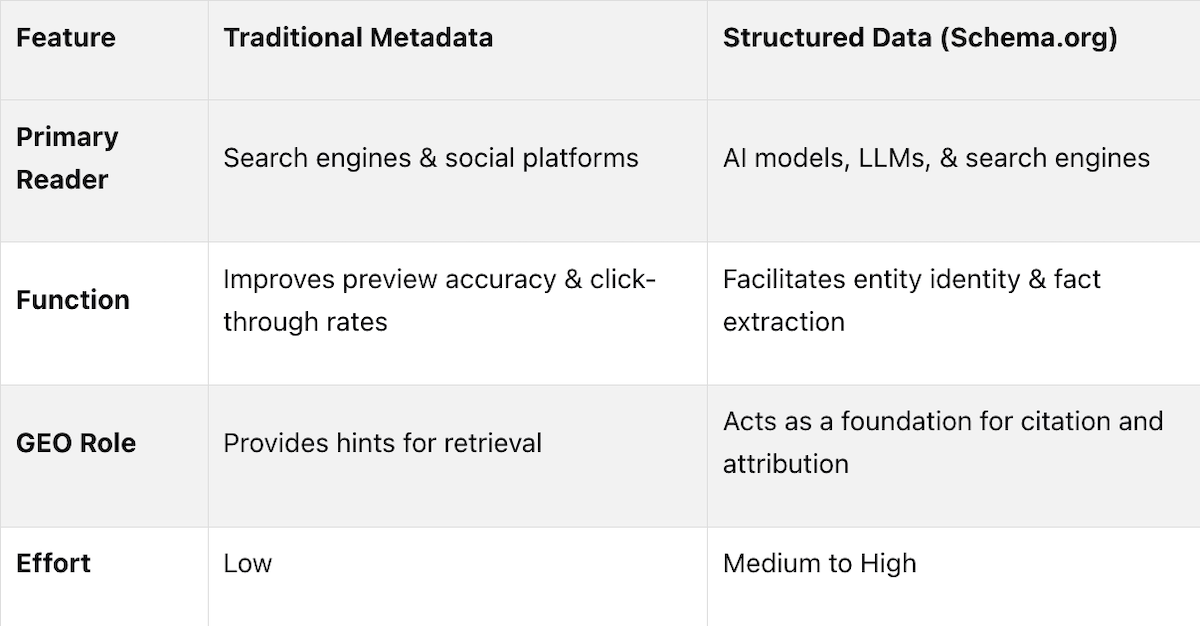
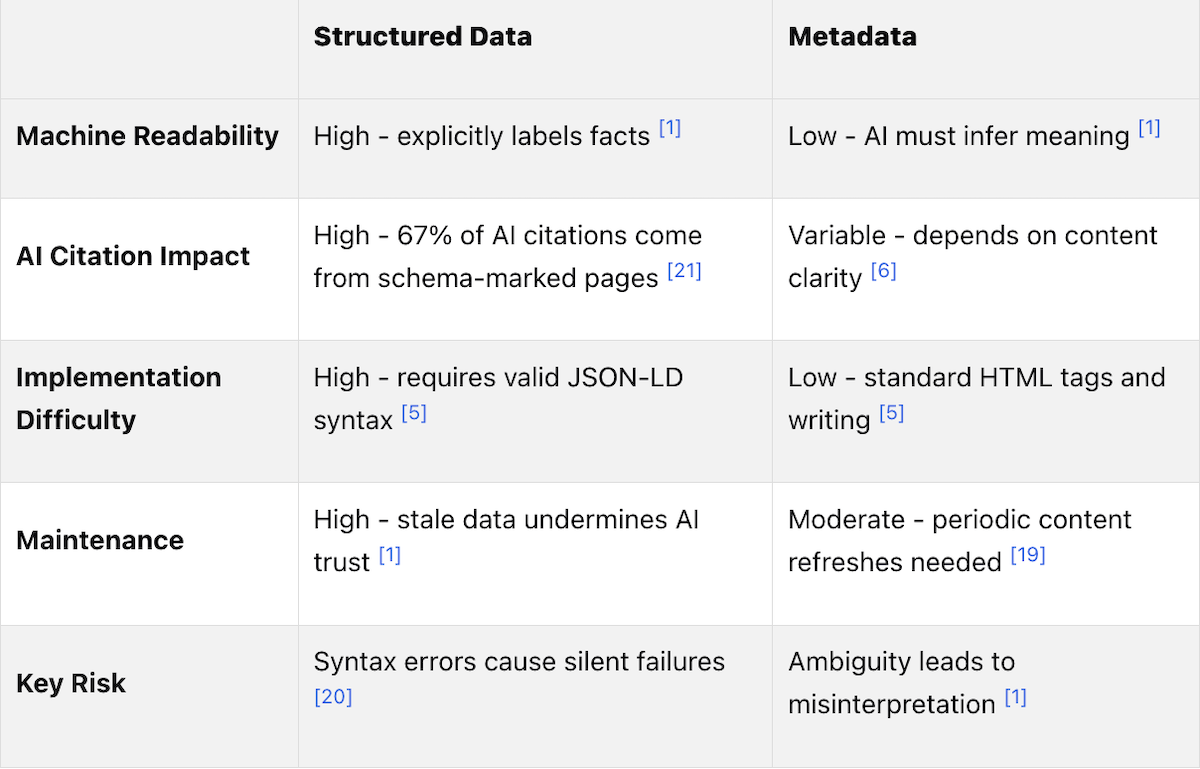
Structured data is machine-readable code (typically JSON-LD) that tells AI systems exactly what your content is about — the author, the topic, the facts. Pages with detailed schema markup achieve a 61.7% citation rate compared to 41.6% for basic schema, meaning the more clearly you label your content for AI, the more likely it is to be cited in AI-generated answers.
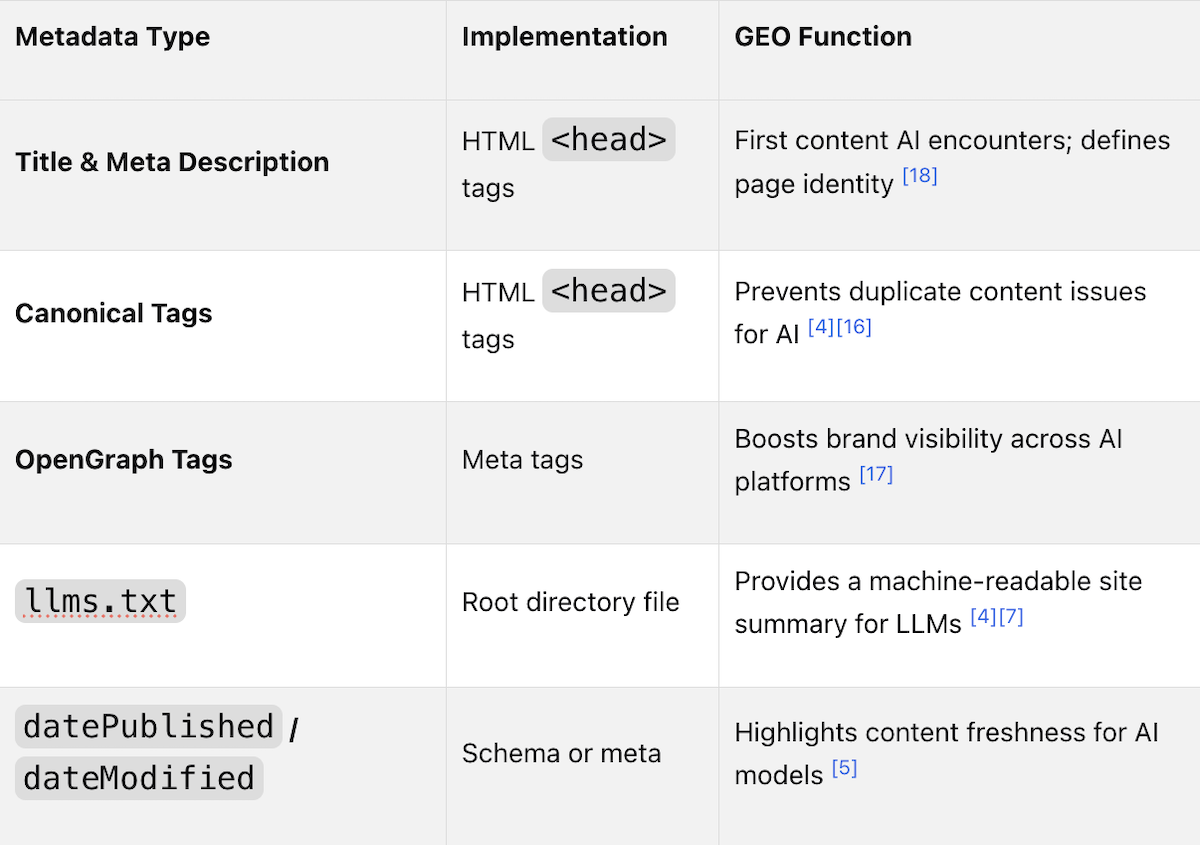
Metadata includes page titles, descriptions, and semantic signals that help AI systems locate and evaluate your content before reading it in full. In the AI era, metadata has expanded beyond driving clicks — it now determines whether AI systems trust and cite your content in the first place.
FAQPage schema is one of the highest-impact schema types for GEO, boosting citation rates to 41% compared to 15% without it. Combined with Article, HowTo, Organization, and Product schema, it creates the structured foundation AI models use to extract and cite specific answers from your content.
Both are necessary and they serve different purposes. Metadata ensures your content is discovered and trusted. Structured data ensures it is accurately cited. Together they create a pipeline that takes AI systems from initial discovery all the way through to verified citation — neither works as well without the other.