

Article Summary
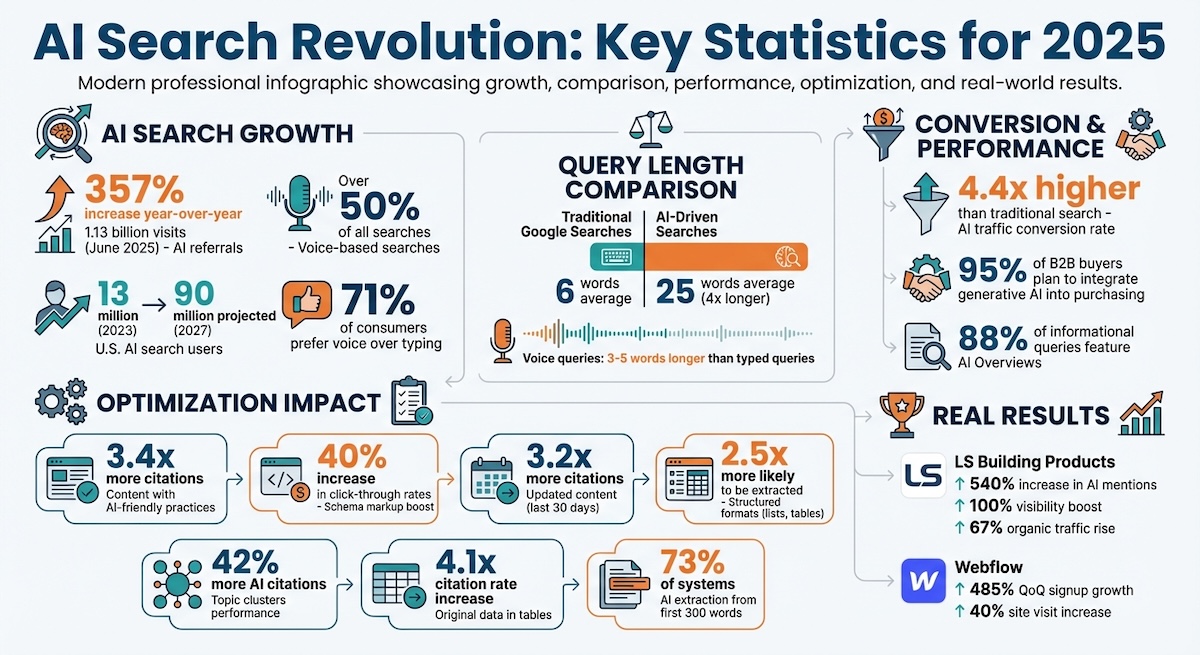
AI-driven search uses much longer, conversational queries - averaging 25 words compared to 6 in traditional search. Over half of all searches are now voice-based, and AI tools deliver direct answers instead of just lists of links, making it crucial for businesses to be the trusted source AI systems reference.
AI search traffic is extremely valuable, converting at 4.4 times the rate of traditional search. In June 2025, AI referrals generated over a billion visits to top websites, highlighting the commercial impact and importance of optimizing for AI-driven queries.
The best techniques include writing concise, direct answers of 40–60 words at the top of each section, using clear modular structures with headings and lists, adding schema markup for machine readability, building interconnected topic clusters, and regularly updating content to stay relevant.
Conversational queries often include detailed context, constraints like budgets or timelines, and involve multi-turn interactions. AI systems break these into sub-questions, so content must anticipate these patterns and be structured to match how people naturally ask questions.
AI systems categorize queries by intent - informational, navigational, or transactional - and prioritize content that matches these needs. Aligning content structure and messaging with user intent is essential for being selected as the answer source by AI engines.