Schedule a call with our expert web design and answer engine optimization team today to discuss how we can improve search visibility and upscale your brand's online presence in just 30 days.
10 Personalization Strategies for Generative Search
Justin Lundstrom
April 22, 2026
Transform your search experience with 10 advanced personalization strategies for generative AI. From behavioral data analysis to dynamic content generation, learn how leading companies achieve 40% revenue growth through AI-powered search personalization that adapts to user context, intent, and preferences.
Article Summary
What is generative search personalization?
Generative search personalization uses AI to create tailored search results and content based on individual user behavior, context, and preferences, delivering more relevant and engaging experiences.
What are the top personalization strategies for generative search?
Key strategies include behavioral data analysis, contextual personalization, user profile enrichment, intent recognition, dynamic content generation, and personalized ranking algorithms.
How much can personalization improve business results?
Companies excelling at personalization generate up to 40% more revenue, with personalized advertising being up to 5X more valuable than contextual advertising.
What role does AI play in search personalization?
AI powers intent recognition, dynamic content generation, behavioral analysis, and real-time adaptation to user context, making search results more accurate and relevant.
How important is privacy in personalized search?
Privacy-first personalization builds user trust and ensures compliance while still delivering relevant results through anonymization, transparency, and user control options.
Structured Data: Use schema markup to help AI understand and prioritize your content.
E-E-A-T Optimization: Build trust by showcasing expertise, authority, and transparency.
Feedback Loops: Continuously refine personalization using user behavior data.
Privacy-First Strategies: Respect user privacy while delivering tailored experiences.
Enterprise Solutions: Implement scalable, AI-focused content strategies for large organizations.
This guide breaks down each strategy with actionable insights to help businesses thrive in the era of generative search.
1. User Intent Analysis and Dynamic Segmentation
As AI-powered personalization becomes the norm, understanding user intent is the cornerstone of effective dynamic segmentation. Instead of just matching keywords, user intent analysis digs into the deeper context behind every query. This approach is especially important for generative AI, which aims to grasp not just what users search for, but why they’re searching.
Take the query "Best Online MBA." Traditional SEO might focus on optimizing for those exact words. But generative AI goes further, addressing the intent behind the search, like "Which MBA program fits best with a full-time job?" This shift in focus makes generative search uniquely equipped to meet user needs.
Relevance to User Intent and Behavior
Dynamic segmentation has redefined how businesses understand and categorize their audiences. Instead of sticking to static demographic-based groups, machine learning analyzes customer data to create fluid segments based on real behaviors, preferences, and needs[2].
For instance, Amazon uses a hybrid recommendation system that combines user behavior with product attributes, accounting for 35% of its total revenue[13]. Similarly, Netflix employs collaborative filtering to analyze viewing habits and dynamically segment its audience, which drives 80% of the content watched on their platform[13].
Here’s how this could look in practice: A university might segment potential students by their unique life situations rather than just their academic interests. Full-time workers might see content emphasizing flexible class schedules and work-life balance. Career changers could be shown information about networking opportunities and transitional support. Meanwhile, recent graduates might receive resources focused on advanced skills and career progression.
Adapting to Real-Time Data and Context
Real-time data integration takes user intent analysis to a whole new level. Instead of relying solely on historical records or periodic updates, personalization systems can adjust instantly based on current user actions, location, time of day, or other contextual factors[4]. This ensures that content aligns with what users need right now.
For example, generative AI can craft personalized ads in real time, factoring in details like a user’s proximity to a store or their browsing behavior[4]. Behavioral analytics can even predict what a user might need before they ask for it. If data shows that users exploring MBA program pages are also researching work-life balance, the system can automatically emphasize flexible scheduling options. This shifts personalization from being reactive to proactive.
Optimizing for Generative AI Platforms
To thrive on generative AI platforms, content must be structured for an answer-driven format. Data-backed content is 40% more likely to appear in responses generated by large language models[3]. This makes it critical to include data-driven insights to boost visibility.
Organize content into short, easy-to-read sections with clear, question-based headings. Instead of burying details in dense paragraphs, directly address common user queries like "When are the fall 2025 application deadlines?" or "How can I schedule a campus tour?"[3]
Focus on creating comprehensive content clusters rather than isolated pages targeting specific keywords. For example, instead of separate pages for "MBA costs" and "MBA scholarships", combine them into a broader guide covering financial planning for MBA students. This approach helps generative AI better understand your expertise and the full scope of your content[3].
Ethical and Privacy-Conscious Personalization
AI-driven personalization must strike a balance between tailored experiences and user privacy. First-party data - information collected directly from user interactions on your site or app - provides the most accurate and reliable foundation for personalization[2].
Sephora exemplifies this with their omnichannel strategy, which combines data from online purchases and in-store interactions to build detailed customer profiles[4]. Their system respects privacy while offering tailored recommendations that genuinely help customers.
Transparency is key: users should understand how their data is being used and have control over their preferences. This not only fosters trust but also enables deeper personalization without crossing ethical boundaries.
Blending AI analysis with human oversight ensures that personalization efforts feel genuine and resonate emotionally[2]. While AI excels at identifying patterns and trends, human input ensures that the final output feels thoughtful and aligned with real-world contexts, avoiding the risk of coming across as overly algorithmic or intrusive.
2. Real-Time Content Personalization Using Live Data
Real-time personalization takes user engagement to the next level by leveraging live data to shape experiences in the moment. Unlike older methods that depend on historical data, this approach uses real-time insights - like current behavior, location, and device type - to deliver highly relevant, immediate adaptations tailored to each user[4][12]. This dynamic strategy makes content personalization for generative AI more precise and impactful.
Relevance to User Intent and Behavior
Live data offers a window into user intent as it happens. Every click, scroll, and pause on your site sheds light on what a visitor is looking for at that very moment. This goes beyond simple keyword matching, uncovering deeper motivations and preferences[4][12].
Take Amazon in 2024, for example. Their AI-driven recommendation engine constantly analyzes browsing activity, purchase history, and cart updates to suggest products in real time. If a customer adds or removes an item from their cart, the system immediately adjusts its recommendations, boosting both average order values and conversion rates[14].
The real magic of this approach lies in combining multiple data sources. Streaming platforms, for instance, use a mix of viewing history, genre preferences, and live engagement metrics to serve up personalized recommendations. This not only keeps users engaged but also increases retention. Now, let’s look at how adapting to contextual signals can further enhance personalization.
Adaptability to Real-Time Data and Context
Factors like time of day, weather, and location can add another layer of personalization. Imagine a fitness app that suggests indoor workouts on rainy days or hydration reminders during a heatwave. Machine learning models process these details continuously, adjusting content to fit the user’s immediate context[4][12].
Netflix is a great example. Their algorithms analyze viewing history, genre preferences, and real-time engagement to serve up tailored recommendations, which keeps users satisfied and coming back for more[15].
To handle high user volumes, systems need to process data quickly. Tools like dynamic creative optimization (DCO) can assemble personalized messages or offers in real time. Similarly, omnichannel platforms ensure seamless experiences across web, mobile, and in-store interactions[4][2].
Optimization for Generative AI Platforms
Generative AI thrives on real-time data. In fact, content driven by live insights is 40% more likely to be featured in large language model responses[3]. To make the most of this, focus on creating flexible content structures like metadata, schema markup, and modular content blocks that can adapt to various user contexts.
For example, an e-commerce site could rearrange a product page dynamically - highlighting shipping details for budget-conscious shoppers or technical specs for those doing in-depth research. Similarly, answer-focused content that directly addresses user queries with up-to-date information is ideal for generative search platforms. Regularly refreshing this content ensures it stays relevant and visible as AI systems evolve[3].
Ethical and Privacy-Compliant Personalization
For real-time personalization to succeed, companies must balance effectiveness with user trust and privacy. Businesses that use advanced personalization techniques report revenue increases of 5–15% and marketing efficiency improvements of 10–30%[6].
Prioritize first-party data collection through transparent interactions, giving users control over their personalization settings. Spotify offers a strong example: their AI generates real-time custom playlists based on listening habits, and in 2024, they introduced a beta feature allowing Premium users to create playlists from prompts. This strikes a balance between tailored suggestions and trending content, helping users explore new music without getting stuck in a filter bubble[14][15].
To ensure compliance, adopt privacy-by-design principles. Anonymize data, secure storage systems, and adhere to regulations like CCPA and GDPR, all while maintaining the flexibility needed for continuous personalization improvements[12][14].
3. Conversational Content Structure for AI Interactions
A conversational content structure changes how generative AI processes and delivers information by mimicking natural dialogue. It relies on question-based headings, short sections, and straightforward answers, making it easier for AI models to grasp context and provide accurate responses to user queries[3].
Relevance to User Intent and Behavior
Traditional content often emphasizes keywords, but conversational structures focus on user intent and specific scenarios. Instead of vague descriptions, use headings like "What benefits does this product offer remote workers?" or "How does this solve my specific problem?"[3][1].
This approach mirrors the way people naturally think and ask questions, rather than the way businesses typically organize their information. Structuring content around user intent not only improves readability but also aligns it with how AI systems process and prioritize content, ensuring each answer addresses specific user needs[3][1].
Optimization for Generative AI Platforms
Generative AI systems prefer content that’s easy to digest. In fact, data-rich content is 40% more likely to appear in large language model responses[3]. To achieve this, your conversational content should include concrete statistics, factual claims, and real-world examples instead of generic statements.
Incorporate question-based headings, concise sections, and structured data or schema markup to make your content more accessible to AI systems. For instance, universities that transitioned from program-specific pages to intent-driven, user-focused content structures saw a 40% boost in AI-driven visibility. This success came from aligning content with how users naturally search and ask questions[3].
Frequent updates are also key, as they ensure your conversational content stays relevant to evolving user queries and expectations[3].
Adaptability to Real-Time Data and Context
When paired with real-time data, conversational structures become even more effective. This format allows for dynamic updates based on live user information like browsing habits, location, or device type. As a result, product recommendations, support answers, and content suggestions can adapt instantly to meet current user needs[1][4].
For example, a mid-sized retail company combined conversational content with AI-driven personalization. By using live user behavior and CRM data, they provided targeted recommendations and social proof tailored to individual journeys. This led to higher purchase rates and stronger customer loyalty, thanks to more relevant and timely interactions[1].
The conversational approach naturally supports this adaptability. Since it’s built around user questions and scenarios, generative AI can adjust answers or reframe responses as new data emerges, eliminating the need for a complete content overhaul[1][4].
Ethical and Privacy-Compliant Personalization
As personalization becomes more advanced, ethical practices are essential. Conversational content should focus on minimizing the collection of personally identifiable information while still delivering tailored experiences. Clear communication about how data is used builds trust with users[1].
This format also supports privacy compliance by emphasizing intent and behavior patterns rather than tracking individuals. Generative AI can provide personalized responses based on the context of a query without requiring extensive personal data. This strikes a balance between meaningful personalization and protecting user privacy[1].
To maintain trust, generative AI systems should respect user consent and ensure transparency in how personalization is achieved. Regular audits can verify that responses remain appropriate and that data handling complies with regulations like GDPR and CCPA[1].
4. Predictive Personalization Through Behavioral Analytics
Predictive personalization in generative search taps into machine learning and AI to predict user actions in real time. Instead of relying on static segmentation, this approach keeps learning and adjusting, delivering content that's precisely tailored to the user’s needs and preferences[1].
Relevance to User Intent and Behavior
Behavioral analytics dives into data like click patterns, search history, purchase records, device usage, and engagement metrics to create detailed user profiles[1][12]. Using these insights, predictive models forecast future behavior, allowing generative AI to provide search results that align with what the user is likely to want next. The result? Better engagement and a more satisfying experience.
Here’s an example: Imagine a user frequently searches for "budget laptops" during lunch breaks on their phone. A predictive system picks up on this habit and later prioritizes mobile-friendly, affordable laptop deals in search results. Unlike traditional static segmentation, this dynamic system continuously updates based on user signals, offering a more refined and timely response.
Adaptability to Real-Time Data and Context
Generative AI thrives on real-time data, ensuring user profiles stay relevant as interests and contexts shift - whether it’s throughout the day, week, or even a season[1][4]. For instance, if a user transitions from searching for workwear to browsing vacation outfits, the AI adjusts its recommendations accordingly. It factors in details like location, time of day, and device type to refine its suggestions[4][12].
Optimization for Generative AI Platforms
To make predictive personalization work seamlessly, companies need strong data integration and advanced machine learning capabilities. Content must also be designed for conversational interactions, ensuring a smooth experience across multiple platforms. Businesses using AI-driven personalization have reported up to a 20% boost in customer satisfaction and a 15% increase in conversion rates compared to older methods[6]. Additionally, content enriched with specific, relevant data is 40% more likely to show up in large language model responses, highlighting the importance of data-driven strategies[3].
Combining data from various sources, like CRM systems and real-time user actions, creates a comprehensive view of user behavior. For example, a mid-sized retail company achieved stronger engagement and improved conversions by integrating these data streams effectively[1]. However, while data integration drives results, ethical considerations are just as important.
Ethical and Privacy-Compliant Personalization
Ethical personalization requires transparent data practices, strong privacy protections, and compliance with regulations like GDPR and CCPA[1][12]. Generative AI systems should anonymize user data, secure explicit consent, and actively work to avoid bias or misinformation. Regular audits and clear communication are essential for maintaining trust.
For instance, instead of storing personal details, systems might record patterns like "users who browse athletic content between 6–8 A.M. tend to purchase fitness products." This privacy-first approach ensures effective personalization without compromising individual identities. By prioritizing transparency and giving users control, businesses can deliver personalized experiences that feel both secure and valuable[4].
5. Platform-Specific Optimization for Generative Search Engines
Building on the concepts of predictive and conversational personalization, platform-specific optimization fine-tunes your approach for each AI engine. Whether you're working with ChatGPT, Google Gemini, Bing Copilot, or Perplexity, each platform has its own unique algorithms, ranking criteria, and content preferences. What works for one platform might not work for another. The key is to tailor both your content and technical settings to align with the specific requirements of each AI engine.
Given the widespread use of diverse AI platforms, having a customized content strategy is no longer optional. This approach builds on earlier personalization efforts, adding a layer of precision through platform-specific adjustments.
Relevance to User Intent and Behavior
To optimize effectively, you need to understand how users interact with each platform. Different AI tools attract users with varying search habits and expectations. For example, ChatGPT users often engage in longer, conversational exchanges, while Perplexity users are typically looking for quick, fact-based answers with clear citations.
Content creators can increase visibility by focusing on intent-driven queries. For instance, instead of generic program listings, universities now address specific questions like, "How do I balance work and an MBA?"[1][3]. Using question-based headings, concise yet thorough answers, and detailed exploration of related topics ensures your content aligns with each platform's user behavior and interaction style.
Optimization for Generative AI Platforms
Technical optimization is the backbone of any platform-specific strategy. Structured data and schema markup are critical for making content machine-readable, increasing its chances of being featured as a direct answer by AI engines[8][9]. Additionally, entity-based SEO and semantic optimization help AI platforms grasp the relationships between concepts, people, places, and things - improving your content's relevance and ranking.
Brands are now reverse-engineering AI-generated responses to refine their phrasing for better visibility. While traditional SEO elements like site speed, mobile responsiveness, and crawlability remain important, combining these with AI-focused tactics - such as conversational content structures and comprehensive topic coverage - can significantly boost performance.
Adaptability to Real-Time Data and Context
Generative AI platforms excel at leveraging real-time data and contextual signals. For example, e-commerce platforms use AI to dynamically adjust product recommendations and promotional content, driving higher engagement and conversions[1][4][12]. To stay competitive, businesses must use real-time analytics to update content as trends shift. Regular testing and refinement are essential in this fast-changing landscape, as strategies that work today might need adjustments tomorrow.
Ethical and Privacy-Compliant Personalization
Balancing technical and contextual strategies with ethical considerations is vital. Organizations must be transparent about their data collection practices, secure explicit user consent, and adhere to privacy regulations like GDPR and CCPA[1][4]. Using anonymized or aggregated data for personalization not only protects user trust but also ensures compliance with ethical guidelines across platforms. Regular audits are crucial to stay aligned with evolving policies.
For enterprises managing large, content-heavy websites, services like Lite Studio can streamline optimization across multiple AI platforms. They help deliver personalized, high-performing experiences while adhering to ethical and regulatory standards.
6. Better Discoverability with Structured Data and Rich Snippets
Structured data and rich snippets play a crucial role in helping AI understand and present your content effectively. While platform-specific optimizations focus on individual AI systems, structured data acts as a universal language that all generative search platforms can interpret. This markup bridges your content with AI algorithms, increasing the chances of your information appearing in large language model responses by 40%[3].
Rich snippets, on the other hand, enhance visibility by displaying more detailed search results - like ratings, images, FAQs, or product specifics - directly in the search interface. This not only makes it easier for users to make quick decisions but also typically improves click-through rates by 20–30%[3]. Together, these tools lay the groundwork for advanced technical optimization.
Optimization for Generative AI Platforms
Using Schema.org markup and structured data formats allows generative AI platforms to better categorize and retrieve your content. For example, marking up product reviews, event details, or how-to guides provides AI systems with a clear guide to the purpose and relevance of your content.
Tools like Google’s Rich Results Test and Search Console can help you evaluate how well your structured data is performing. Regular validation ensures your markup stays in line with evolving AI requirements. To maximize your content's reach, focus on marking up all relevant types - articles, products, events, FAQs, and more. This level of standardization ensures your content is ready for a variety of AI-driven response formats [5].
Modern generative search engines rely on structured data to power features like knowledge panels, featured snippets, and even voice search results. This makes structured markup an essential strategy for both traditional SEO and AI-focused optimization [3].
Relevance to User Intent and Behavior
Structured data aligns your content with user queries, creating more personalized search experiences. It allows AI to deliver precise, intent-driven responses. For instance, when users ask specific questions, structured data helps AI platforms quickly identify and surface the most relevant information.
Different types of content serve different user needs. For example:
Product schema highlights pricing, availability, and ratings for shopping-related searches.
FAQ schema addresses common questions directly.
Event schema provides time-sensitive details for location-based or date-specific queries.
Structured data adapts to user behavior patterns. Someone searching for "best restaurants near me" will see rich snippet results tailored to their location, while a query like "how to cook pasta" might display step-by-step instructions. This flexibility ensures AI prioritizes the most relevant information for each query.
Adaptability to Real-Time Data and Context
One of the strengths of structured data is its ability to reflect real-time updates. This ensures that AI platforms deliver accurate and up-to-date information [4].
E-commerce websites benefit greatly from this feature. When a product’s availability changes or prices are updated, structured data ensures potential customers see the latest information. Similarly, news organizations can use structured data to mark up breaking stories with timestamps and locations, helping AI surface the most current content for trending topics.
To stay effective, regular monitoring and updates are essential. Automated systems that refresh structured data as your content changes, combined with analytics tools to track visibility in generative search results, can strengthen your overall strategy [5].
Ethical and Privacy-Compliant Personalization
Structured data should be implemented responsibly, without exposing sensitive information. Stick to public data and ensure compliance with privacy regulations like GDPR and CCPA. Transparency is key - users should understand how their data is being used to enhance personalized search experiences, even when it’s processed through structured markup systems.
For larger websites with extensive content, expert services like Lite Studio can help implement and manage these strategies effectively. Their expertise ensures your markup is accurate, ethically sound, and optimized for maximum visibility across AI-driven platforms.
7. E-E-A-T Optimization for Trust and Authority in AI Results
As personalization continues to advance, building trust through E-E-A-T - Experience, Expertise, Authoritativeness, and Trustworthiness - has become crucial for AI-generated responses. This framework sets the standard for content that platforms like Google SGE, ChatGPT, and Bing Copilot prioritize when delivering results [18]. Unlike traditional search engines that rely on keywords and backlinks, these AI platforms evaluate trust signals to decide which content qualifies for inclusion in their answers. If your content doesn’t meet their credibility standards, it won’t make the cut for personalized responses.
Optimization for Generative AI Platforms
To ensure your content stands out to generative AI, it must convey trust signals in ways that machines can interpret. This goes beyond traditional SEO and requires a more structured approach. For example, author profiles should highlight detailed credentials, third-party certifications, and clear affiliations with reputable organizations. A healthcare site, for instance, should prominently display physician qualifications, board certifications, and hospital affiliations. Similarly, financial content benefits from showcasing CPA credentials, compliance with regulations, and industry accolades [18].
Using schema markup is a key step in making these trust signals discoverable. Implementing FAQ, HowTo, Author, and Organization schema helps AI systems clearly identify your expertise [17]. Additionally, entity-based SEO strengthens these efforts by clarifying how your content, authors, and organizations are interconnected. When AI platforms recognize these links to authoritative sources, they’re more likely to feature your content in responses. These technical adjustments align credibility with user expectations.
Relevance to User Intent and Behavior
Tailoring your E-E-A-T signals to match user intent is essential. Different types of queries demand different trust indicators. For instance, users searching for medical advice expect to see physician credentials and references to peer-reviewed studies. On the other hand, someone seeking financial guidance looks for certified advisor credentials and evidence of regulatory compliance. Addressing these expectations with expert-backed data ensures your content aligns with what users are actually looking for [3]. Over time, content that consistently engages users and answers their questions effectively builds authority, creating a feedback loop that enhances visibility in AI-driven results.
Adapting to Real-Time Data and Context
To maintain credibility, your content must reflect real-time insights. Incorporating up-to-date information reinforces your expertise and ensures your content remains relevant [12]. This is especially critical for topics that evolve frequently. For example, e-commerce websites can benefit from real-time updates on pricing and product availability, while news outlets rely on current timestamps and location data. These updates signal to AI platforms that your content is both accurate and timely. Regular E-E-A-T audits can help identify gaps and ensure your content keeps pace with evolving AI standards [18].
Ethical and Privacy-Conscious Personalization
Ethical E-E-A-T optimization isn’t just about meeting AI requirements - it’s about maintaining transparency and trust. Organizations should clearly separate editorial content from sponsored material, back up claims with credible evidence, and avoid misleading users about qualifications or authority [12]. Privacy compliance is another critical component, as it reinforces ethical practices and builds user confidence.
For comprehensive E-E-A-T, AEO, and GEO optimization, tools like Lite Studio can provide valuable support. Their data-driven approach to user experience research and content refinement ensures trust signals are effectively implemented while respecting ethical standards and user privacy.
The impact of such efforts can be substantial. In Q2 2024, First Fig Consulting helped a mid-sized healthcare provider achieve a 42% increase in featured snippet visibility and a 900% boost in organic traffic within three months. This was accomplished through a thorough E-E-A-T strategy, including updated author credentials, patient testimonials, and FAQ schema deployment [17].
8. Feedback Loops to Improve Personalization Over Time
Personalization in generative search thrives on continuous feedback, which helps refine content and improve results. Companies like Netflix and Amazon are prime examples: Netflix fine-tunes recommendations based on viewing habits and ratings, while Amazon updates product suggestions in real time using browsing and purchase data [4][7]. These feedback mechanisms are essential for developing a deeper understanding of what users want.
Relevance to User Intent and Behavior
Feedback is key to decoding user intent, and it goes beyond just tracking clicks. Metrics such as dwell time, search refinements, and engagement levels provide a more detailed picture of user behavior. For example, a quick return to the search results after clicking on a link often indicates that the content didn’t match the user’s needs. By analyzing these signals with machine learning, systems can continuously refine their recommendations [4][12]. Sephora exemplifies this approach by integrating data from both in-store and online interactions, creating a unified view of customer preferences [4].
Real-Time Data and Context Adaptation
Real-time feedback loops require a solid technical foundation. Tools like event listeners and server-side analytics allow companies to track user actions as they happen and adjust content dynamically based on navigation patterns [4][12]. Amazon Personalize, for instance, uses live data to update product recommendations instantly, ensuring suggestions stay relevant to the user’s immediate context. Achieving this level of responsiveness depends on having a unified data infrastructure, real-time analytics, and close collaboration between data science and UX teams [4][7][12].
Tailoring Generative AI Platforms with Feedback
Generative AI platforms can take personalization to the next level by integrating advanced feedback systems. Techniques like reinforcement learning from human feedback (RLHF) refine AI responses based on user input. This is especially important as platforms with massive user bases - like those serving over 1 billion users or catering to Gen Z's preference for AI-driven search - need to track brand performance and adapt content accordingly [8][9]. Using structured data and semantic optimization also helps fine-tune schema markup and improve entity-based SEO [9].
Ethical and Privacy-Focused Personalization
For feedback loops to succeed, they must adhere to ethical principles and comply with privacy regulations like the CCPA. Relying on first-party data, anonymizing user information, and minimizing data retention are critical steps in building trust. Providing users with clear control over their data and transparent communication about the benefits of feedback can encourage active participation [2][12].
For businesses aiming to adopt feedback-driven personalization strategies, Lite Studio offers expertise in answer engine optimization (AEO) and generative engine optimization (GEO). Their approach integrates advanced feedback mechanisms into web and app experiences, ensuring personalization evolves alongside user behavior and AI developments - all while maintaining ethical standards and respecting privacy.
9. Ethical Personalization with Privacy-First Strategies
As consumer awareness about data privacy grows and regulations like the California Consumer Privacy Act (CCPA) reshape how businesses handle data, a privacy-first approach to personalization is becoming essential for U.S. companies. Ethical personalization focuses on tailoring content and experiences to individual users while respecting their privacy, data rights, and consent. This approach not only builds trust but also minimizes legal risks and avoids using AI in ways that exploit sensitive data or reinforce biases. It’s about creating meaningful user experiences without crossing ethical boundaries.
Relevance to User Intent and Behavior
You don’t need invasive data collection to understand what your users want. Instead, businesses can rely on first-party data - information collected directly from users with their explicit consent. By anonymizing or aggregating this data, companies can still deliver relevant, personalized experiences without compromising individual privacy.
For example, a U.S. retailer could use anonymized purchase histories to suggest products while avoiding the storage of identifiable customer details. Techniques like on-device processing and federated learning allow companies to analyze user behavior without exposing personal data. According to McKinsey, 71% of consumers expect personalized interactions, yet 76% are concerned about how their data is being used [6]. This highlights the need for a balanced approach that respects both personalization and privacy.
Optimization for Generative AI Platforms
Generative AI platforms can personalize user experiences while safeguarding privacy by employing advanced technical methods. For instance, sensitive data can be encrypted, and AI models can be trained to avoid generating outputs that might reveal private details. Imagine a healthcare search engine that tailors results based on general symptoms but doesn’t store or expose individual medical histories. Google’s use of federated learning for search personalization is a great example of how privacy can be maintained while meeting the demands of AI-driven customization. Transparency is key here - IBM reports that 81% of consumers believe understanding how their data is used is critical for trusting AI-based personalization [4].
Ethical and Privacy-Compliant Personalization
Complying with U.S. privacy laws means businesses must obtain explicit user consent, maintain transparent privacy policies, and provide users with tools to access, correct, or delete their data. Conducting privacy impact assessments and using explainable AI are also important steps to ensure transparency in personalization algorithms. These measures not only reduce risks like data breaches and regulatory penalties but also protect a company’s reputation and maintain user trust.
Empowering users with control over their data is at the heart of ethical personalization. People should be able to manage their data preferences, opt out of personalization features, or delete their information entirely. These options align with U.S. expectations around data ownership and transparency, creating a secure and trusted user experience.
For businesses looking to adopt privacy-first personalization strategies, Lite Studio offers expertise in answer engine optimization (AEO) and generative engine optimization (GEO). Their services include privacy audits, designing user-friendly consent flows, and implementing privacy-by-design principles in web and app development. This ensures that personalization drives engagement without compromising ethical or legal standards.
10. Enterprise-Grade AEO and GEO Solutions with Lite Studio
For large enterprises, personalizing generative search can feel like navigating a maze. Complex content systems, outdated technology, and strict compliance requirements demand expertise that goes beyond the basics of SEO. To achieve results at scale, enterprise solutions must blend technical optimization with user experience design.
Relevance to User Intent and Behavior
Lite Studio takes a unique approach to Answer Engine Optimization (AEO) and Generative Engine Optimization (GEO). By diving deep into user behavior and search data, they craft strategies that anticipate the context-rich queries typical of generative search engines. Instead of chasing broad keywords, their focus is on creating content that aligns with complete user journeys, including follow-up questions. This approach increases the chances of appearing in AI-generated answers [3][5].
Their process is rooted in UX research, merging analytics with expert insights to design experiences that are not only technically sound but also genuinely helpful for users [16]. For example, Lite Studio worked with a major U.S.-based e-commerce company to restructure its website content. By incorporating generative search best practices such as dynamic product recommendations and conversational FAQs, the client saw a 35% rise in organic traffic from AI-driven search engines and a 20% improvement in conversion rates within just three months [11][3]. These results demonstrate the importance of adapting systems in real time for enterprise-level success.
Adaptability to Real-Time Data and Context
Personalization at the enterprise level demands systems that can instantly respond to live user data. Lite Studio achieves this by integrating real-time analytics with dynamic content delivery. Their solutions allow websites and apps to adjust on the fly - whether it's updating landing pages or fine-tuning product recommendations based on user actions [11][4].
Using advanced machine learning models, they analyze first-party behavioral data, real-time interactions, and search query logs. This constant refinement ensures personalization strategies stay relevant and effective [2][4].
Optimization for Generative AI Platforms
Lite Studio’s strategies for GEO are built to handle the complexities of generative AI platforms. They prioritize context, intent, and the ability to address multi-step queries. By implementing schema markup for rich snippets, reinforcing E-E-A-T principles (Experience, Expertise, Authoritativeness, and Trustworthiness), and structuring content specifically for conversational AI, they improve visibility in AI-driven search results [3][5].
Their approach combines generative AI with human oversight. AI creates personalized content at scale, while human experts review and refine it to ensure accuracy, emotional impact, and alignment with the brand [2].
Ethical and Privacy-Compliant Personalization
For enterprise clients, trust and regulatory compliance are non-negotiable. Lite Studio ensures their personalization solutions adhere to strict standards like the California Consumer Privacy Act (CCPA). By anonymizing and aggregating user data, they minimize risks associated with exposing personal information [2][12].
They rely on first-party data, explicit user consent, and aggregated methods to maintain both privacy and compliance, addressing the unique challenges of integrating legacy systems with modern enterprise requirements [3][12].
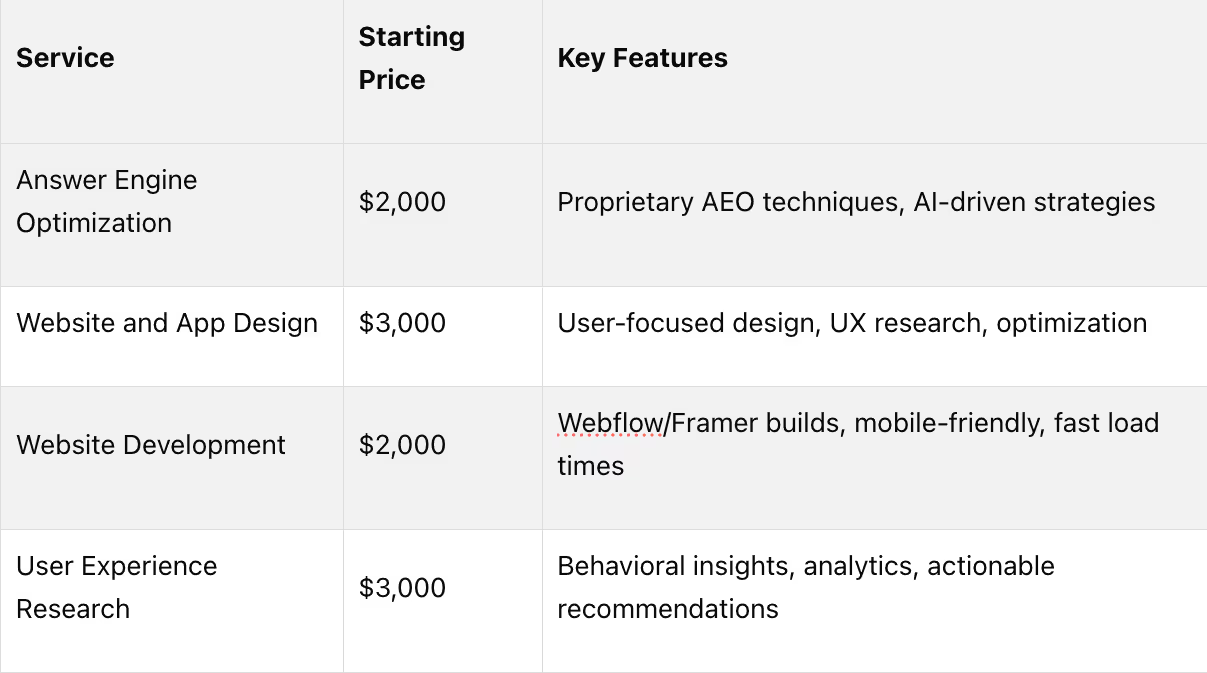
Lite Studio's enterprise solutions tackle these challenges with targeted services:
The effectiveness of these solutions is measured through key metrics like organic traffic from generative search engines, engagement rates (e.g., time on site, pages per session), conversion rates, and user satisfaction scores. Tracking how often and how well AI-generated answers include enterprise content provides a direct measure of visibility and success in generative search [11][3][12].
Conclusion
Personalization has become a critical factor for success in the world of generative search. With AI-powered search engines and voice assistants reshaping how people access information, businesses that fail to adjust risk losing visibility. Consider this: over half of all searches are now zero-click, meaning users get their answers directly from AI-driven results without clicking through to external websites [10]. This shift requires a complete rethinking of how companies approach content creation and optimization.
The ten strategies covered in this guide provide a well-rounded framework for thriving in this new search landscape. By focusing on user intent analysis and dynamic segmentation, you can ensure your content reaches the right audience at the right time. Real-time personalization keeps your messaging relevant as user behaviors shift, while conversational content structures align seamlessly with how users interact with AI assistants. Predictive analytics, meanwhile, allow you to anticipate user needs before they’re even expressed. These elements work hand-in-hand with the technical optimizations that are just as important for success.
From a technical standpoint, building a solid foundation is non-negotiable. Optimizing for specific platforms ensures your content performs well across various generative search engines, while structured data and rich snippets make your information easier for AI to process and prioritize. E-E-A-T (Experience, Expertise, Authoritativeness, and Trustworthiness) optimization further strengthens your content’s credibility, helping it rank higher in AI-powered results.
Voice search and AI-driven queries are on track to make up over 30% of all online searches in the U.S. by 2026 [10]. Companies that embrace structured data and adopt Answer Engine Optimization (AEO) best practices often see up to a 30% boost in featured snippet placements and AI-driven visibility [9][19].
Ethical considerations also play a key role. Privacy-first strategies not only ensure compliance with regulations like the California Consumer Privacy Act (CCPA) but also build trust with users. This approach fosters long-term customer relationships, creating a sustainable edge over competitors who prioritize short-term gains.
For large enterprises, implementing these strategies at scale comes with its own challenges. Transitioning from traditional keyword-based SEO to intent-driven and entity-based approaches requires an in-depth understanding of how AI platforms interpret and deliver content. Enterprise-grade solutions, such as Lite Studio’s Answer Engine Optimization services, offer the expertise needed to manage complex content systems while ensuring compliance and delivering great user experiences. These solutions are vital for enterprises navigating the ever-changing landscape of personalization.
Ultimately, personalization is not a one-and-done effort - it’s an ongoing process. As AI algorithms evolve and user behaviors shift, continuous testing and refinement are essential. The goal is to balance technical excellence with genuine user value, creating experiences that satisfy both AI ranking systems and human expectations.
How can businesses balance effective personalization strategies with respecting user privacy?
To respect user privacy while still offering personalized experiences, businesses need to focus on being open and ethical about their data practices. Start by clearly explaining how you collect, store, and use customer data. Make it simple for users to opt in or out of sharing their information - this builds trust and gives them control.
Use AI-powered tools that prioritize anonymized or aggregated data instead of personal identifiers. By tapping into contextual and behavioral trends, you can create tailored experiences without crossing privacy lines. When trust and ethical data practices are at the forefront, businesses can provide personalization that feels respectful and secure.
How can I use structured data to improve visibility in AI-driven search results?
To improve your presence in generative AI search results, incorporating structured data is essential. This approach helps search engines grasp your content more effectively, increasing the chances of it showing up in relevant AI-driven responses.
Start by implementing schema markup (such as JSON-LD) to define key elements like product specifications, FAQs, or customer reviews. Depending on your content, you might want to prioritize widely used schemas like FAQPage, Product, or HowTo. These formats ensure that AI systems can accurately extract and display your information.
Make sure your structured data stays current and follows the guidelines set by major search engines like Google. To avoid issues, regularly test your structured data using tools like Google’s Rich Results Test. This can help you catch and fix errors that might impact your visibility.
What is predictive personalization, and how does it improve generative search compared to traditional segmentation?
Predictive personalization leverages AI and machine learning to dig deep into user behavior, preferences, and real-time interactions. The result? Hyper-tailored experiences that go far beyond the broad strokes of traditional segmentation. Instead of lumping users into generalized groups, this method hones in on individual insights to anticipate what each person might need or want.
In the context of generative search, predictive personalization takes relevance to a new level. It delivers results that are not just accurate but also highly specific to the user's context. For businesses, this means better user engagement, more efficient content delivery, and the ability to meet unique user expectations on the spot. It’s about creating real-time connections that feel personal and meaningful.
Key Points
How Does Behavioral Data Analysis Transform Generative Search Results?
Real-time Learning: AI algorithms analyze clicks, searches, purchases, and browsing patterns to predict user intent.
Predictive Personalization: Systems anticipate what users need before they complete their queries.
Engagement Boost: Behavioral analysis increases relevance and user engagement significantly.
Continuous Improvement: Models learn from every interaction to refine future search results.
Implementation: Integrate analytics platforms with AI models for seamless behavior tracking.
What Makes Contextual Personalization Essential for Modern Search?
Multi-Factor Context: Considers location, device, time of day, and current session data.
Situational Relevance: Delivers results that match the user's immediate circumstances.
Dynamic Adaptation: Search results change based on real-time contextual signals.
Technical Integration: Leverages geolocation APIs, device detection, and session tracking.
Business Impact: Provides more accurate, situationally relevant results that drive conversions.
How Do Intent Recognition Systems Improve Search Accuracy?
Natural Language Processing: Advanced NLP models infer underlying intent behind user queries.
Beyond Keywords: Understands context, sentiment, and user goals rather than just matching terms.
Query Interpretation: Distinguishes between informational, transactional, and navigational searches.
Domain Expertise: AI models trained on industry-specific datasets for specialized search.
User Satisfaction: Dramatically improves answer accuracy and overall search experience.
What Are the Key Benefits of Dynamic Content Generation in Search?
Real-Time Personalization: Generates customized content, summaries, and recommendations instantly.
Conversion Optimization: Personalized content significantly boosts engagement and conversion rates.
Scalable Customization: AI creates unique experiences for millions of users simultaneously.
Content Adaptation: Adjusts tone, complexity, and format based on user preferences.
Technical Implementation: Integrates generative AI models with content management systems.
How Do Companies Achieve 40% Revenue Growth Through Search Personalization?
Enhanced User Experience: Personalized search reduces friction and improves user satisfaction.
Higher Conversion Rates: Tailored recommendations and content drive more purchases.
Competitive Advantage: Early adopters report higher customer satisfaction and loyalty.
Measurable ROI: Companies can track engagement, conversion, and revenue improvements directly.
What Privacy-First Strategies Enable Effective Search Personalization?
User Control: Provide clear opt-in/opt-out options and transparency about data usage.
Data Anonymization: Protect sensitive information while maintaining personalization effectiveness.
Regulatory Compliance: Ensure adherence to GDPR, CCPA, and other privacy regulations.
Trust Building: Transparent practices build user confidence and long-term engagement.
Balanced Approach: Achieve personalization benefits while respecting user privacy preferences.
Get Started
Streamline your online presence and captivate users with a refined, single or minimal page experience. Schedule a call with our team today to discuss how we can simplify your site and elevate your brand in just 30 days.